Surgeon console
The surgeon views the operative field and translates hand movements into instrument movements in real time.
A plain-language look at new medical technologies and therapies—what changed, what it could mean, and what still needs to be proven.
 Scientific concept art · not a clinical diagram
Each update is read through three questions so promising headlines stay connected to real evidence and real patients.
Systems such as Intuitive’s da Vinci platform can help trained surgeons perform selected minimally invasive procedures. The surgeon—not the robot—controls every movement.
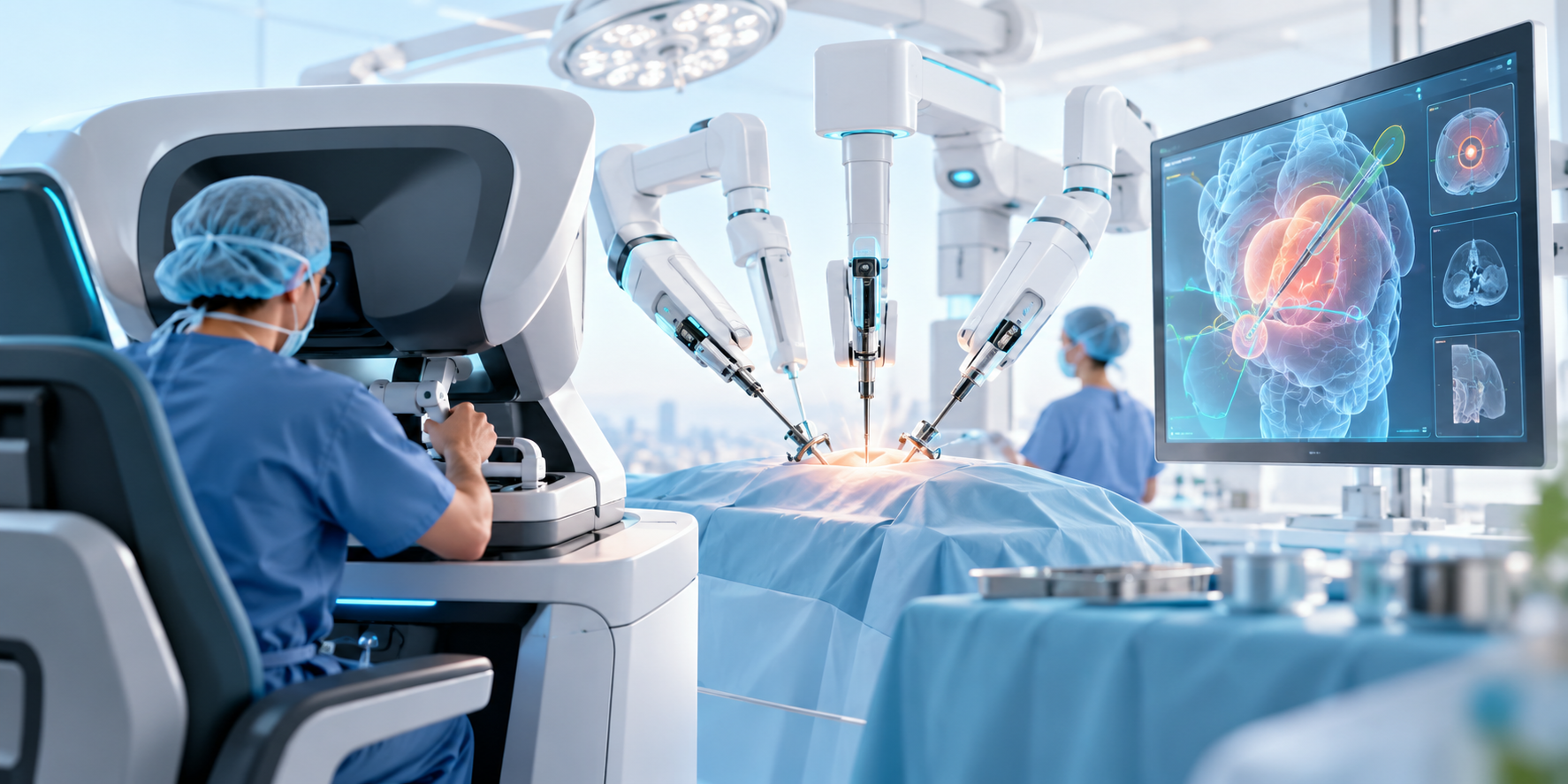
The surgeon views the operative field and translates hand movements into instrument movements in real time.
A magnified three-dimensional view can make detailed anatomy easier to see during selected procedures.
Small, wristed instruments can move precisely in confined areas while the bedside team remains present.
A 2023 systematic review qualitatively compared robotic and conventional laparoscopic surgery across multiple abdominal and pelvic procedures. It did not pool patient-level effects.
Counts show the direction reported by studies for each outcome—not pooled patient outcome rates. “Favoured” means a statistically significant result in that study; it does not establish that one approach is best for every operation or patient. No formal meta-analysis was conducted.
Computer-assisted systems such as the da Vinci platform let a trained surgeon control a magnified camera and articulated instruments during selected minimally invasive procedures. The system does not decide or operate autonomously.
CASGEVY edits a patient’s own blood-forming stem cells outside the body. The US FDA-approved uses include certain patients with recurrent vaso-occlusive sickle-cell disease or transfusion-dependent beta-thalassaemia.
The US FDA approved lenacapavir for pre-exposure prophylaxis in eligible adults and adolescents, with continuation injections every six months after initiation.
Over-the-counter continuous glucose monitors are widening access for some people who do not use insulin, making glucose patterns easier to observe without a prescription in the United States.
A small early study built an mRNA vaccine around each person’s tumour. Long-lived immune responses in some participants have supported a larger randomised study.
Early-phase findings suggest stem-cell-derived islet cells may restore insulin production in some participants. Larger studies are examining durability and safety.
A small case series explored CD19-directed CAR T cells in severe, treatment-resistant lupus, inflammatory myositis and systemic sclerosis, with encouraging remissions.
A trustworthy research summary makes methods, uncertainty, harms, governance, and conflicts as visible as the exciting result.
Who took part, eligibility, sample size, countries, and who may not be represented.
Research question, study design, intervention, comparator, and prespecified outcomes.
Absolute results, confidence intervals, adverse events, follow-up, and missing data.
Trial registration, DOI or PMID, ethics review, protocol changes, and regulatory jurisdiction.
Generalisability, important limitations, funding, author interests, and unanswered questions.
Publication date, source-check date, reviewer, corrections, and a transparent update history.

Adults can submit a focused experience, barrier, or research idea through a private intake, with one optional supporting document about themselves. Contact is optional, nothing is public, and any future study or publication requires a separate process.
Open the research intakeNothing here is a treatment recommendation or a promise of availability. Regulatory status and trials can change; use the linked primary sources and discuss personal questions with a qualified clinician.